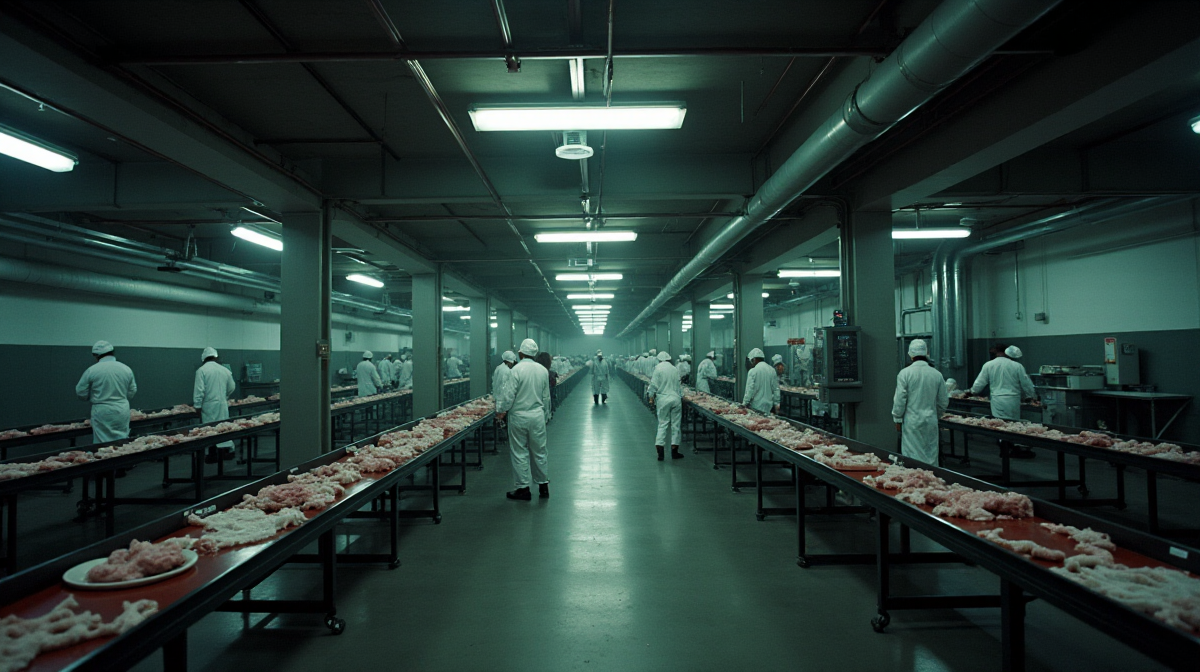
Walk to the back of any supermarket in this country and look at the meat case. Dozens of brands, dozens of packages, different price points, different labels. Some say local. Some say premium. Some have the name of a ranch on them that sounds like it's somewhere in Wyoming. Most of that is theater. Behind the curtain, four companies process the overwhelming majority of beef sold in the United States. Four. In an industry that sells tens of billions of dollars worth of product every year.
Tyson. JBS. Cargill. National Beef. They're known in the industry as the Big Four, and their combined market share of beef processing sits somewhere around eighty-five percent depending on whose numbers you use. In pork and poultry the picture isn't much different. This is what economists call an oligopoly, and the practical effect on your grocery bill is exactly what you'd expect.
When a small number of players dominate a market, they don't have to coordinate illegally to raise prices together. They just watch each other. One raises prices after a supply disruption. The others follow. Margins stay wide. The squeeze goes downstream to the ranchers who raise the cattle and the consumers who buy the steaks, while the processors collect tolls on both ends.
What happened during the pandemic years made this structure impossible to ignore. Cattle prices paid to ranchers dropped. Consumer beef prices spiked to record highs. The spread between what ranchers received and what consumers paid reached levels that even captured the attention of the Justice Department, which opened an antitrust investigation that has moved with the urgency of a very tired glacier.
How it happened, who it benefited, and why the word competition has become a polite fiction in American agriculture. That’s what we got into, and the numbers are not subtle.